

Fire safety in residential buildings has always carried weight—but in today’s environment, the stakes are higher, scrutiny is sharper, and the margin for error is smaller than ever.
Across Canada, recent fires are reinforcing a hard truth: fire and life safety is not just a regulatory obligation—it’s an operational responsibility with real human and financial consequences.
In Toronto, a recent high-rise fire linked to lithium-ion batteries caused significant damage and disruption (CBC News). In Halifax, emergency crews responded to a basement fire in a multi-residential building, displacing residents and raising concerns around building systems and response readiness (CTV News). In London, Ontario, a high-rise fire left multiple people in critical condition and forced entire floors out of service for days (London Free Press).
These are not isolated incidents—they reflect a broader shift in risk across the rental housing sector.
“Fire and life safety is not just a regulatory obligation — it is an operational responsibility with real human and financial consequences.”
Ontario Fire Code Changes in 2026 Will Increase Compliance Pressure
At the same time, compliance is becoming more complex.
Effective January 1, 2026, updates to the Ontario Fire Code introduce more stringent requirements aimed at improving safety and aligning with national standards. These changes directly impact how buildings are managed, documented, and audited.
They include expanded carbon monoxide alarm requirements across residential units, enhanced fire alarm inspection standards under ULC-S536 and S537, more detailed reporting expectations, and a formal requirement for property managers to sign off on deficiencies—creating a permanent record of accountability. Enforcement is also increasing, with potential fines reaching $50,000 for individuals and $500,000 for corporations.
More detail on these changes can be found here: https://www.tssa.org/changes-ontario-fire-code-new-requirements-co-alarms
Why Fire Safety Compliance Gaps Happen in Rental Housing
But in practice, compliance gaps are rarely the result of negligence.
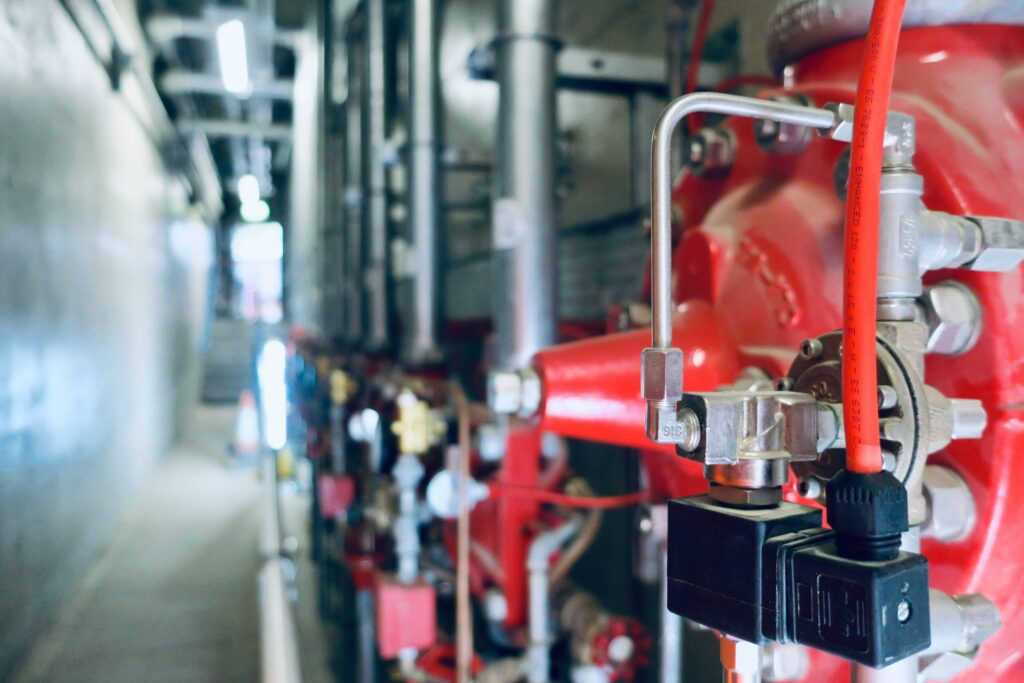
They are far more often the result of fragmented systems, disconnected documentation, and limited visibility into whether required inspections and maintenance have actually been completed—and can be verified.
Common Fire Safety Risks Outside an Operator’s Control
Some of the biggest fire safety risks are outside an operator’s control:
- Residents who refuse entry for inspections or smoke alarm testing
- Hoarding conditions that increase fire load and block safe egress
- Unattended cooking, still the leading cause of residential fires
- Overloaded electrical outlets and unsafe in-suite behaviours
These are everyday realities in rental housing. And while they can’t always be prevented, the responsibility for life safety—and the liability—still sits with the landlord.
Fire and Life Safety Compliance Requires More Than a Checklist
This is where the gap between regulation and reality becomes most visible.
Fire and life safety isn’t a checklist—it’s an ecosystem. Codes define expectations. Buildings are designed to meet them. Systems are installed to support them. But over time, without consistent oversight, training, and accountability, that alignment begins to break down.
Fire Safety Plans are intended to bridge that gap—but only if they are actively implemented, understood, and maintained in practice.
From a governance perspective, this is where real exposure exists. When documentation is incomplete, inspections are inconsistent, or access attempts aren’t properly tracked, operators are left vulnerable—not just during an emergency, but during audits, investigations, and regulatory reviews.
And with new 2026 requirements—particularly around deficiency sign-off and enhanced reporting—that exposure becomes even more visible and enforceable.
Why Strong Property Management Teams Still Struggle With Fire Safety Accountability
There’s a reason this work resonates with so many professionals in the built environment. It’s layered, time-consuming, and critical.
Over the years, I’ve seen how easily gaps form—not because people don’t care, but because the systems around them make it harder than it should be. Teams are often doing their best to stay compliant, but without the right structure and visibility, even strong operators can struggle to keep pace.
How Safe Buildings Tech Modernizes Fire Safety Compliance
This is exactly the kind of challenge Safe Buildings Tech was created to solve.
Founded by Jason Reid and Aamer Merchant, the platform is built on real-world experience in fire safety, emergency response, and compliance.
Jason Reid is a nationally recognized expert in fire and emergency management, with a track record of advancing best practices across Canada. His experience leading safety programs in complex environments like the Toronto Eaton Centre reflects a deep understanding of both regulatory expectations and operational realities.
Aamer Merchant brings over 30 years of experience in law enforcement, intelligence, and emergency response, including major international events such as the G8/G20. His expertise in risk, investigations, and technology brings a critical operational lens to how safety systems should function in practice.
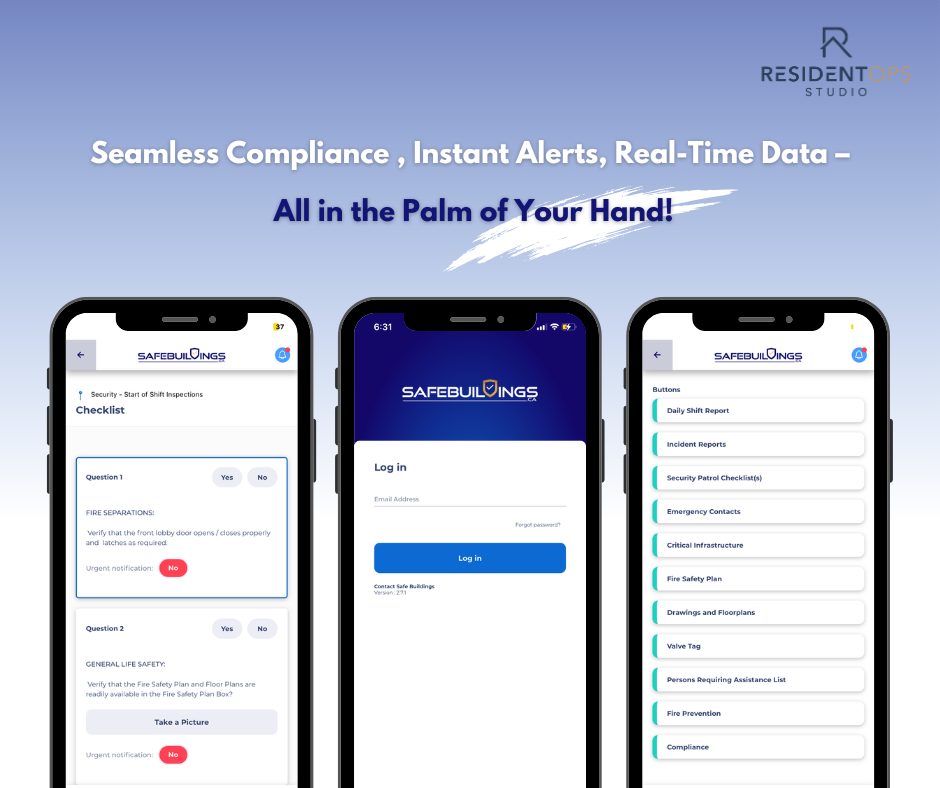
Together, their combined experience bridges policy, enforcement, and day-to-day operations—resulting in a platform designed for how fire safety is actually managed in rental housing today.
Key Fire Safety Compliance Features for Rental Providers
Safe Buildings Tech supports rental providers, property managers, and developers by bringing structure, visibility, and accountability into one centralized system. It enables teams to digitally track inspections, maintenance, and deficiencies, maintain real-time audit-ready records, ensure compliance with updated fire code and ULC standards, and document critical actions such as deficiency sign-offs and access attempts.
It doesn’t add more work—it replaces fragmented processes with a clear, connected approach.
Learn more about Safe Buildings Tech
Better Fire Safety Systems Also Protect Insurance and Ownership Interests
Strong fire safety compliance also plays a critical role beyond operations. For owners, maintaining high standards supports insurance outcomes—demonstrating due diligence, proactive risk management, and a clear commitment to prevention and staff education. Insurers look for this level of discipline when assessing claims and ongoing coverage.
For third-party property management groups, it also sends a clear message to the owners they represent: that their assets and residents are being protected, and that risk, liability, and exposure are being actively managed—not passively accepted.
The Future of Residential Fire Safety Compliance Is Proactive, Structured, and Defensible
Fire safety will always require diligence, but it shouldn’t rely on guesswork.
The opportunity now is to move from reactive to proactive, from manual to structured, and from unverified to defensible.
Because at its core, this isn’t just about meeting code.
It’s about protecting people.
It’s about reducing risk.
And it’s about giving operators confidence that what needs to happen—is actually happening.
The responsibility of life safety in the communities we manage is significant. There is no room for outdated systems that prioritize box-checking over real accountability.
And with increasing fire incidents, evolving regulations, and the realities of day-to-day operations, there is no time to waste in modernizing how we manage fire and life safety across our buildings.
The good news is—there are better ways to do this work today.
And the operators who embrace that shift will be the ones best positioned to protect their residents, their teams, and their portfolios moving forward.